Hatch spent the day at Work in Progress, a working session on designing an intentional evolution of work, powered by Full Circle. Not a conference. A room of operators, flipcharts and markers, taking real roles apart and trying to rebuild them around outcomes.
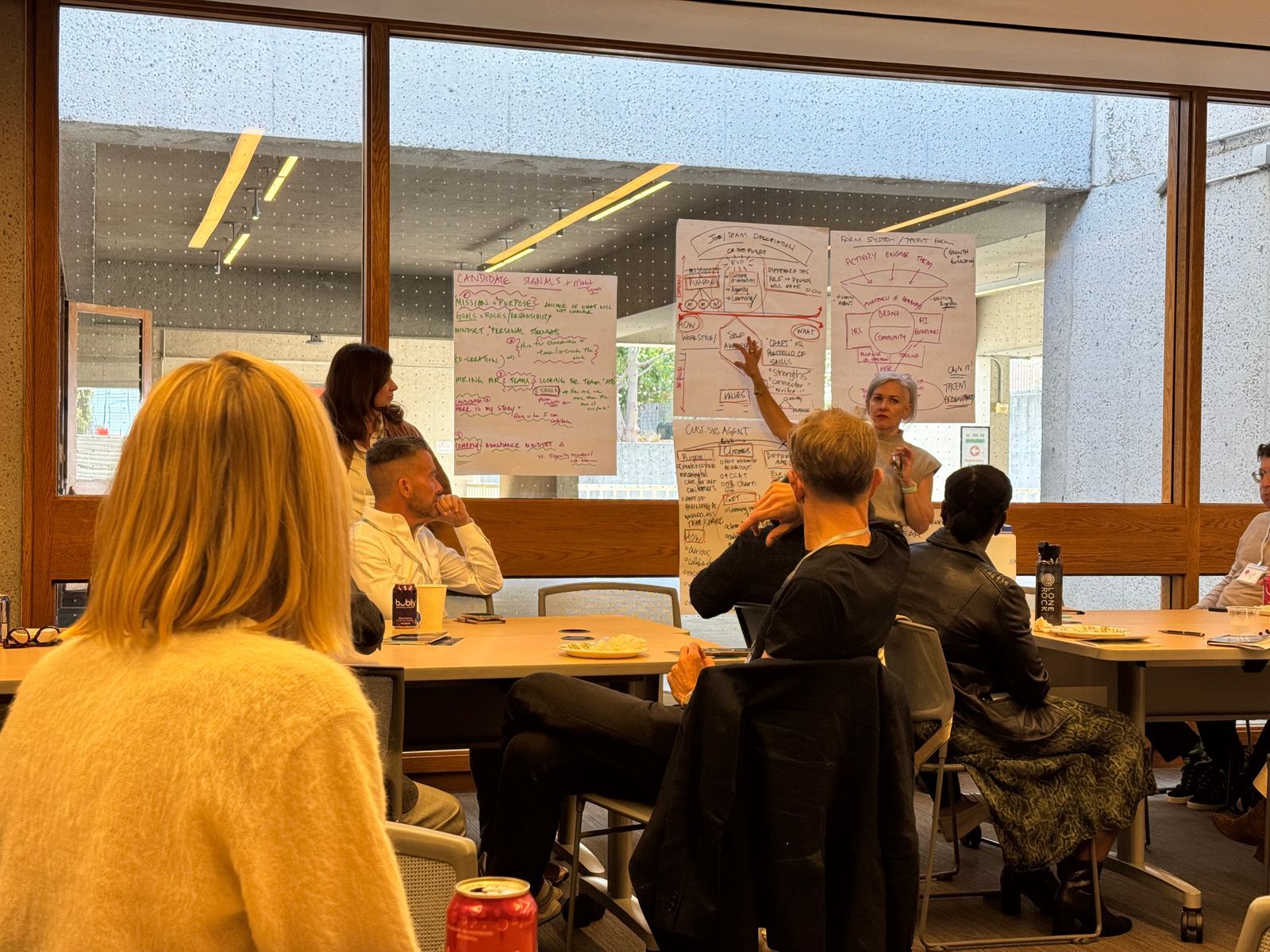
The exercise
The prompt taped to the wall was blunt. Identify the two or three most important questions a company should ask before redesigning a role around outcomes. Then identify what would have to change to make that role outcome-ready.
Groups picked real jobs and tried it. A customer service agent. A manager. In every case the same thing happened in the same order. Naming the outcome was easy. Proving it was not.
Four words on a flipchart
One group wrote down the test, and it is the best short version of this problem we have seen anywhere:
- Clarity. Can the outcome be described clearly?
- Evidence. Can you tell whether it actually happened?
- Control. Does the person have real influence over it?
- Attribution. Can you separate their contribution from the team's?
Most roles pass the first and fail the other three. That is not a failure of job design. It is a measurement gap that job design cannot close on its own, and it is where outcomes-based models quietly collapse back into activity tracking.
What it does to the manager
Another wall took on what the manager role would have to become under an outcomes-based model. Three answers came back:
- Goal setter, sense maker, aligner
- Someone who sets the conditions for success rather than handing out the work
- Someone who builds the metacognitive muscle of the team, the habit of noticing how the work is going while it is still going
None of that is supervision. All of it depends on knowing what the team actually produced, which puts you straight back on evidence and attribution.
The part we did not expect
This was a people and talent crowd, not a finance crowd. They arrived at attribution anyway, unprompted, within about an hour.
That matters. Attribution is a finance question. When the people side of the house starts asking it on its own, the gap between what a company spends on its workforce and what it can prove that workforce returned has stopped being theoretical and started being operational.
Why we were in the room
We did not present. We listened, and we argued a bit.
Hatch exists because of the second, third and fourth words on that flipchart. Clarity is a writing problem and most companies can solve it in an afternoon. Evidence, control and attribution are infrastructure problems, and no amount of rewriting a job description will touch them.
Sessions like this are worth more than conferences because nobody is selling. The failure modes come out honestly, in front of people who have hit them. If you are moving a team onto outcomes and getting stuck somewhere past clarity, that is the conversation we want to have.